
Children Who Chew Better Have Better Physical Fitness
Risa HIRAMATSU
Takayuki KOSAKA
Kazunori IKEBE
Department of Removable Prosthodontics and Gerodontology
Masatoshi OTSUGU
Kazuhiko NAKANO
Department of Pediatric Dentistry
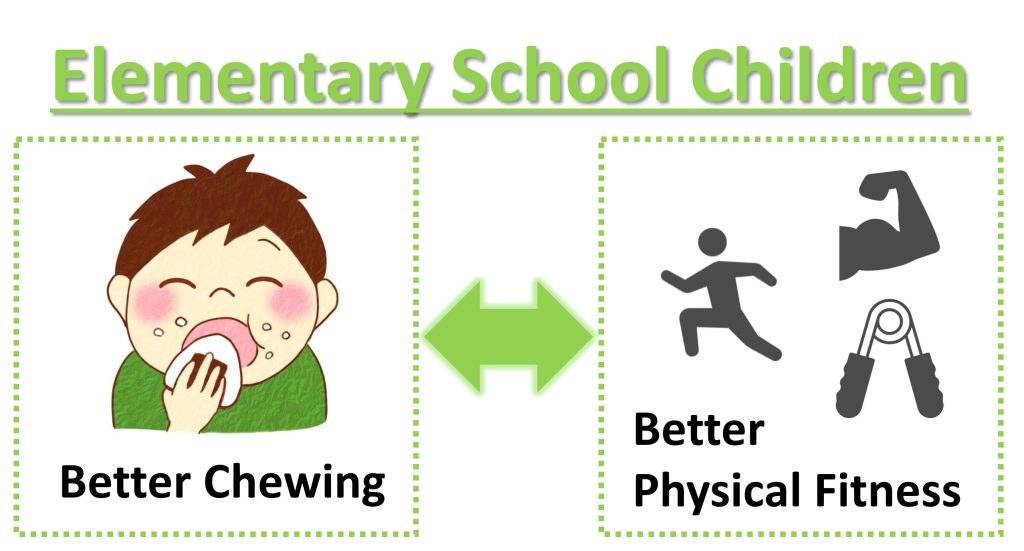
A research group from the University of Osaka has demonstrated that in Japanese elementary school children, higher masticatory performance (the ability to chew food efficiently) is associated with superior physical fitness. The study was based on data from 1,225 children aged 9-10 years in Osaka, Japan.
The school-aged period is a crucial stage for significant physical development. Although masticatory performance is known to be important for nutrient intake and is closely related to physical growth, its direct association with children’s physical fitness had not been sufficiently examined.
In this study, the research group, in collaboration with the Osaka City Board of Education, the Osaka City School Dentists’ Association, and Lotte Co., Ltd., analyzed masticatory performance (assessed using a color-changeable chewing gum) and the results from seven standardized physical fitness tests for 1,225 fourth-grade students.
The results indicated that higher masticatory performance was significantly associated with better scores on tests measuring endurance and agility. Furthermore, it was also associated with the composite physical fitness score, which was calculated from the results of the multiple tests.
These findings highlight the importance of developing and maintaining adequate masticatory function during childhood, which was associated with higher physical fitness in this study, thereby supporting healthy physical development. It is expected that the importance of oral function will also gain attention in health promotion at school and at home.
The results of this study “Association between masticatory performance and physical fitness in Japanese elementary schoolchildren: The Osaka MELON Study” was published in the international scientific journal, Journal of Dentistry, on July 6, 2026, at DOI: https://doi.org/10.1016/j.jdent.2026.106867