
Elucidating Factors Causing Debonding of CAD-CAM Resin Composite Molar Crowns under the Japanese National Health Insurance System
Shintaro BAN, Atsushi MINE
Department of Regenerative Prosthodontics
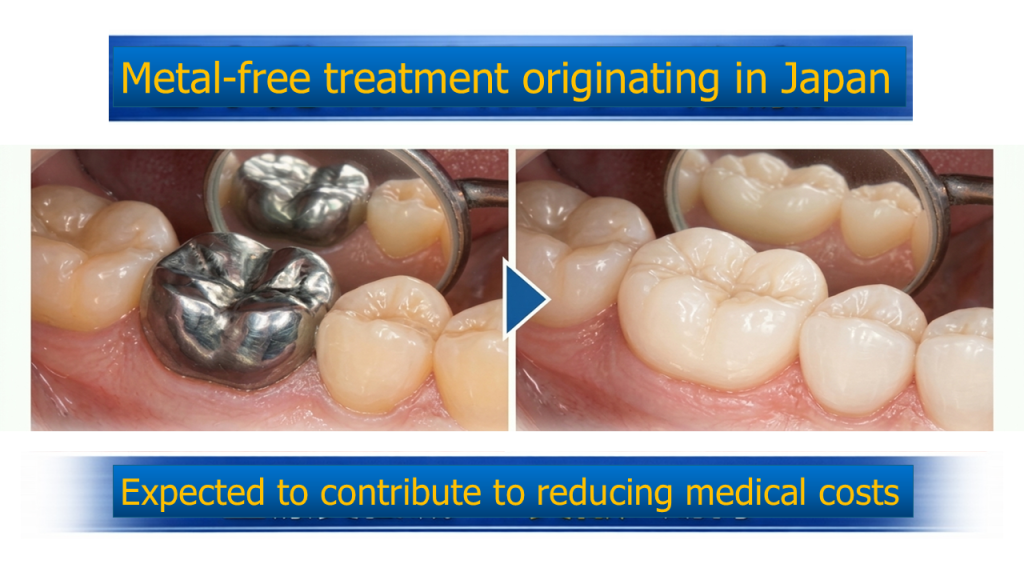
A research group investigated the prognosis of CAD-CAM resin composite crowns placed on molars at The University of Osaka Dental Hospital. For the first time in the world, they identified factors influencing crown debonding by integrating three-dimensional (3D) digital data and clinical data.
An analysis of the clinical course of 117 CAD-CAM molar crowns revealed that only one crown fracture and one root fracture occurred, resulting in a 4-year survival rate of 95.5%. Although 14 crowns were debonded, all crowns have been remained after recementation. Further detailed analysis of the debonded cases showed that the shape of the abutment tooth, the thickness of the crown, and the type of luting cement significantly influenced the risk of debonding. Specifically, crowns with greater occlusal thickness were found to be more prone to debonding.
This study represents the first report to clarify the causes of molar CAD-CAM crown debonding using both clinical data and 3D digital analysis. The findings suggest the potential to achieve more minimally invasive, metal-free treatments by enabling the clinical application of tooth-colored crowns with reduced preparation.
These valuable findings titled, “3D digital data analysis to identify factors influencing debonding of CAD-CAM resin composite molar crowns: A 4-year clinical study,” have been published in the English scientific journal, “Journal of Prosthodontic Research” on April 7, 2026 at DOI: https://doi.org/10.2186/jpr.JPR_D_25_00149